Overgrown
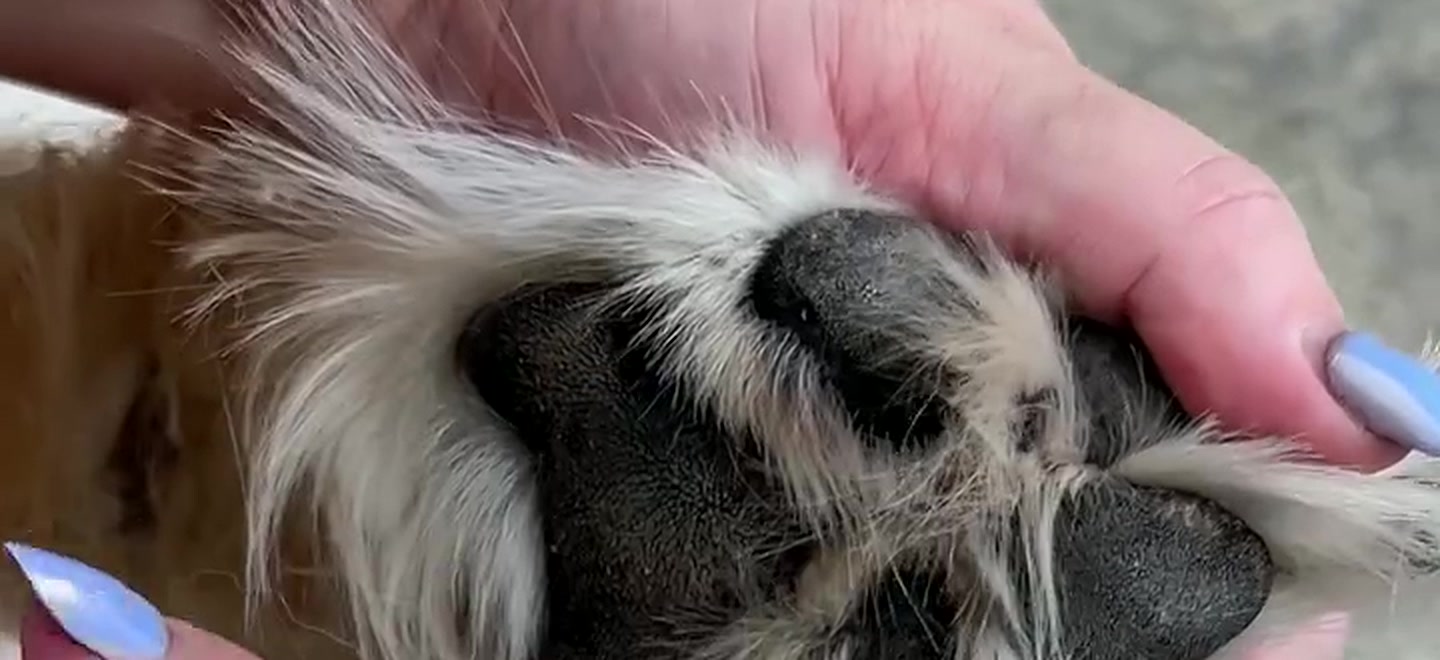
- Hair sits level with or above the pads.
- Pads barely touch a hard floor.
- Grit and moisture stay trapped in the gaps.
How to tell your dog is due, how often to do it,
and exactly where the cutter stops.
You will usually notice it in the room before you notice it on the paw. Three places to look.
Claws skittering on hardwood, tile or laminate. Feet sliding out on a turn. The dog taking the long way round on carpet instead of crossing the kitchen.
Same dog, same floor, moving normally outside on grass — that contrast is the signal.
Short, careful steps indoors. Rear legs splaying out under load. A pause at the top of the stairs, or a scramble to stand up from a lying position on a smooth floor.
Turn the paw over in good light. If hair rises level with the pad surface — or you can see it fanning out past the pad edges — the dog is standing on fur.
Matting, grit or clumped hair between the pads counts too.
| Coat | Examples | Check | Typical trim | What you are cutting | HEELSIDE P1 |
|---|---|---|---|---|---|
| Short | Beagle, Boxer, Staffordshire | Monthly | Every 6–8 weeks | A light fringe at the pad edges | ✓ |
| Double | German Shepherd, Husky, Corgi | Every 2 weeks | Every 3–4 weeks | Dense hair filling the gaps between pads | ✓ |
| Long | Golden Retriever, Setter, Collie | Every 2 weeks | Every 3–4 weeks | Long strands fanning out past the pad edges | ✓ |
| Curly | Poodle, Doodle crosses, Bichon | Weekly | Every 2–3 weeks | Curling hair that mats and traps grit | ✓ |
Intervals are a starting point. The paw decides: trim when the fur reaches the pad surface, not when the calendar says so.
Length check: where the cutter stops.
Overgrown
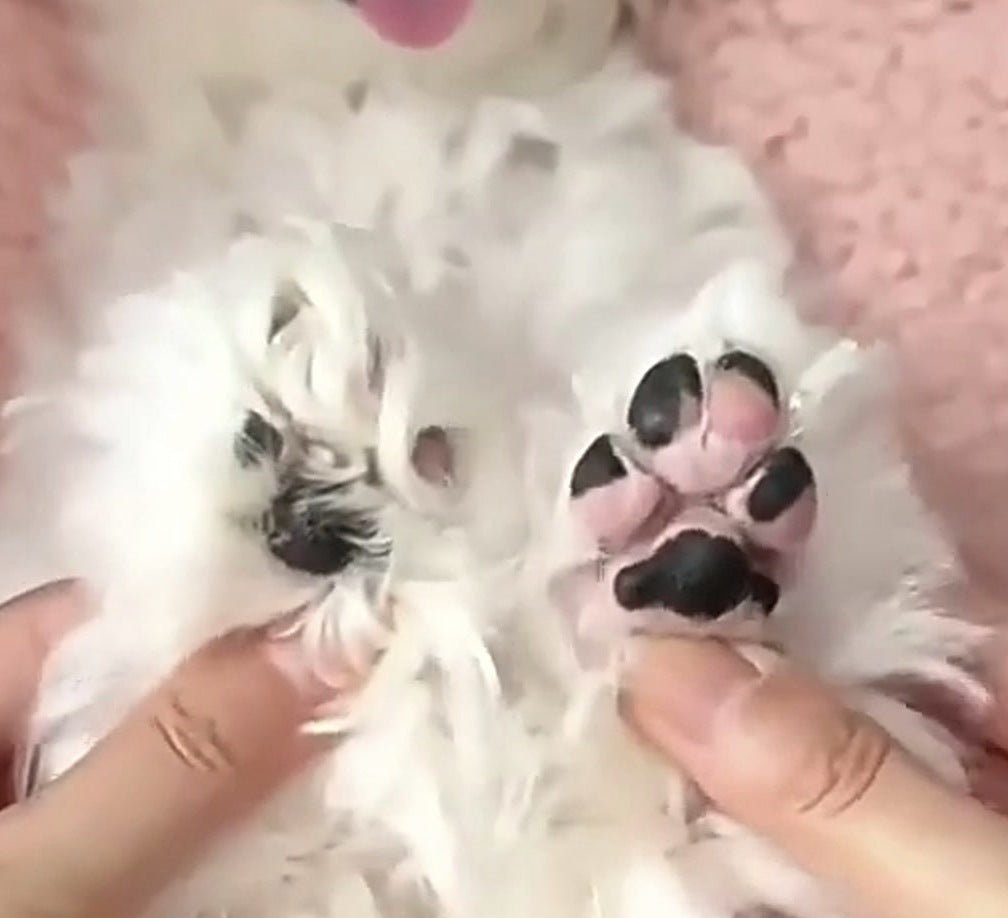
Correct
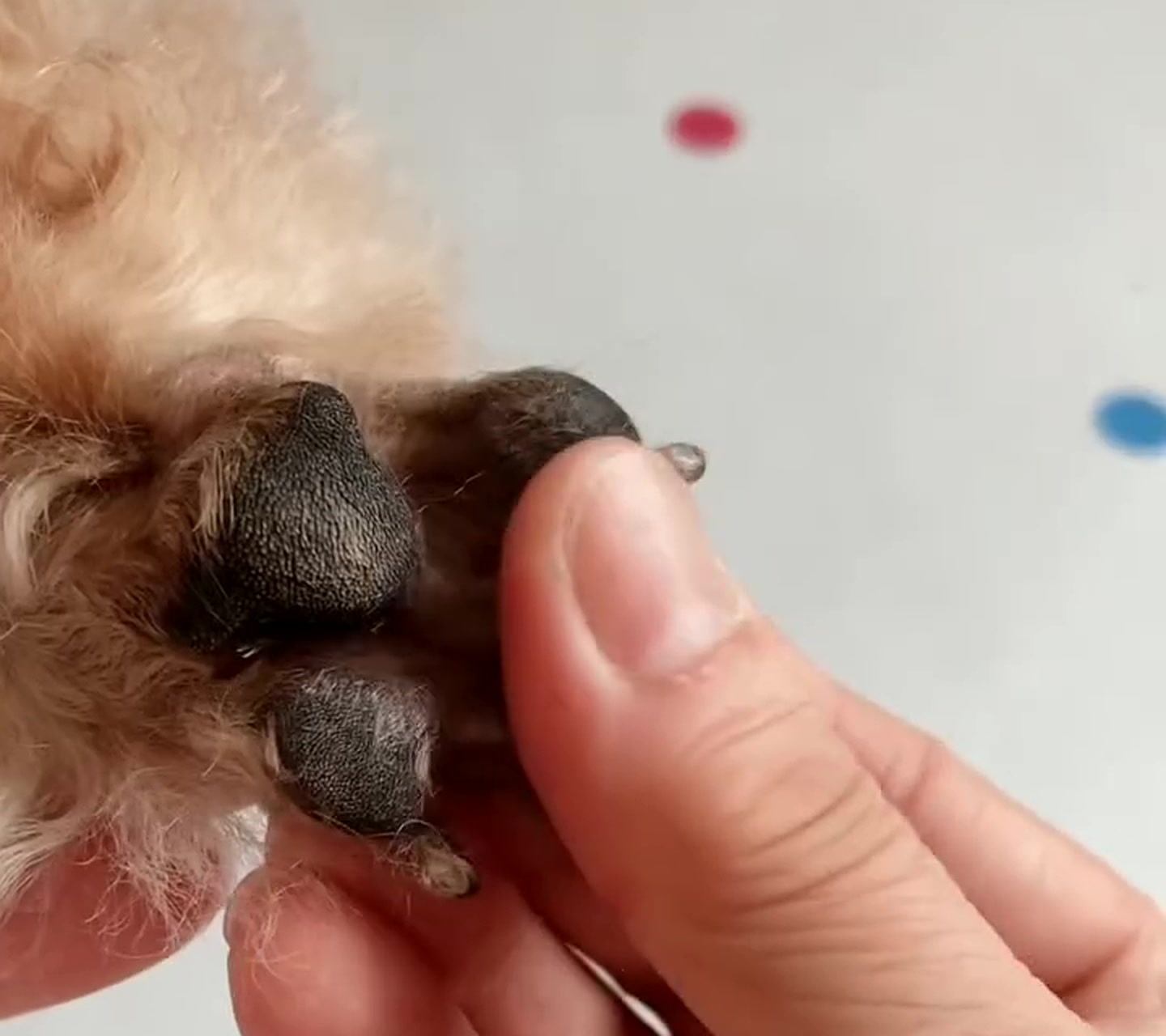
Too far
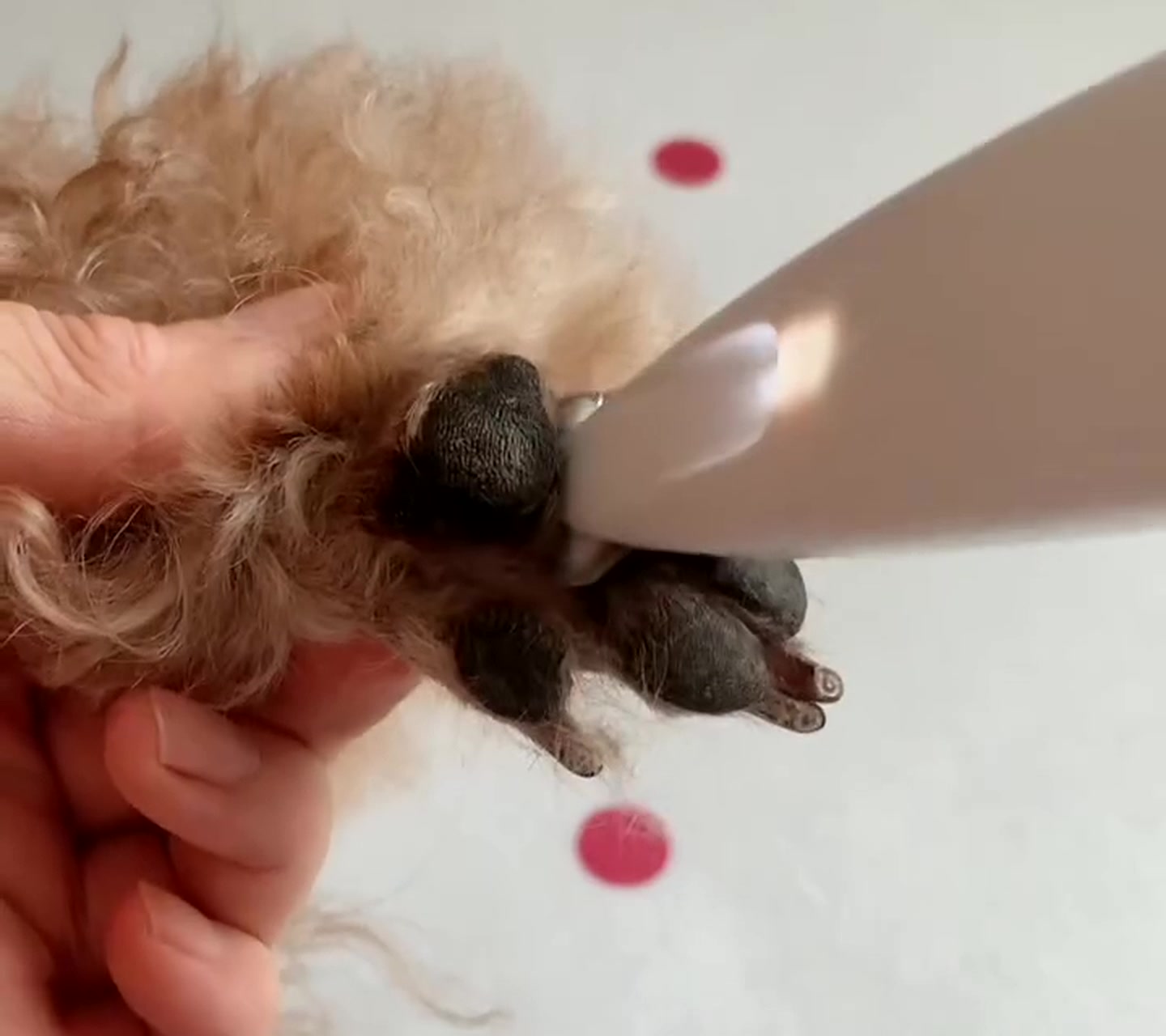
Roughly two minutes for four paws once you have done it twice. Charge the P1, or run it on the cable — it works while charging.
01
Sit on the floor or hold the dog on its side across your lap. Never work on a standing dog — you lose the angle and the dog braces.
02
Spread the toes gently with your thumb and finger so the gaps open. Switch on the LED — it shows where pad ends and hair begins.
03
Lay the 18 mm head flat against the fur and draw it across the gaps in short strokes. Two or three passes, checking as you go. Never push the head into the pad.
04
Set the paw down flat: every pad should meet the floor. Brush out the loose hair, then rinse the head under water and let it dry.
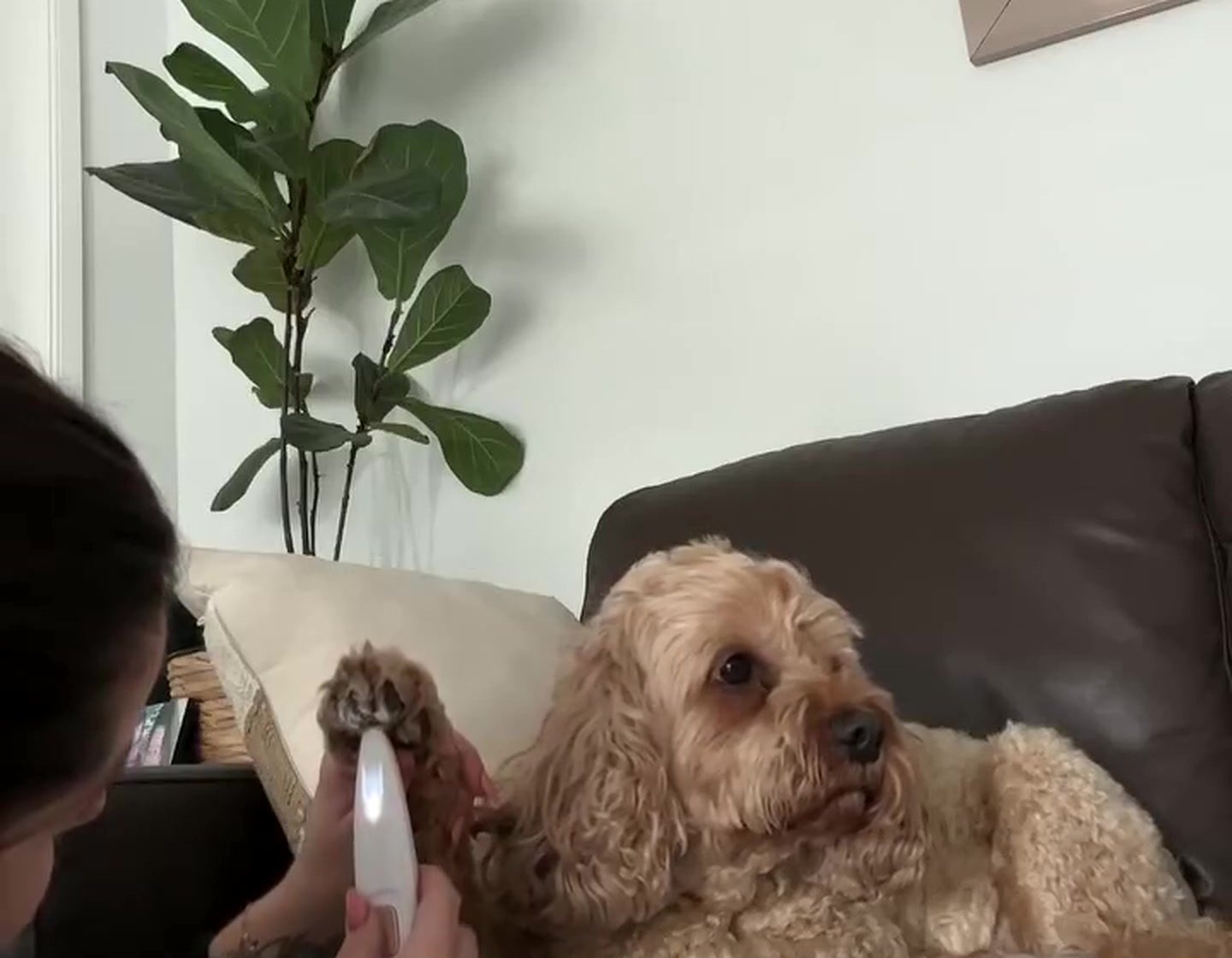
Run the P1 switched on in the room for a few days before it ever touches a paw — the 35 dB class motor is quiet enough that most dogs stop reacting quickly. Then do one paw and stop. A trim spread over four sittings still counts as done.
Still struggling? Talk to us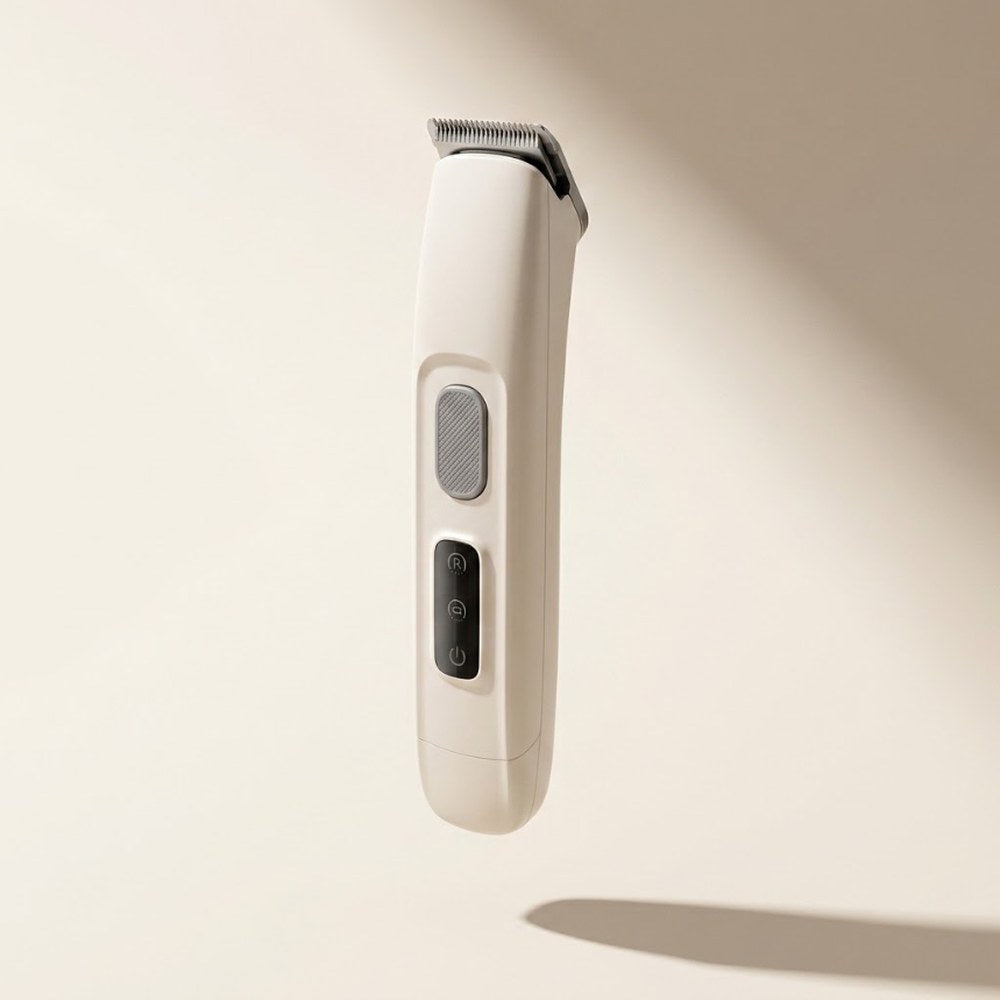
The ceramic head cuts hair, not skin — but the rules still matter. When in doubt, take less off and check again in a week.
Stop immediately if the paw is cut, cracked, swollen or sore, and see a vet before trimming again.
| Area | Do | Trim? |
|---|---|---|
| Fur between the pads | Take it back flush with the pad surface. | ✓ |
| Fur over the pad faces | Clear it — this is the layer costing the grip. | ✓ |
| Fur on top of the foot | Tidy only if it drags. It is not load-bearing. | Optional |
| The pads themselves | Never. Callused pad is the grip — leave every millimetre of it. | ✕ |
| Skin in the webbing | Never. Keep the head flat and moving, not pressed in. | ✕ |
| Nails | Different job, different tool — use the G1 Nail Grinder. | ✕ |
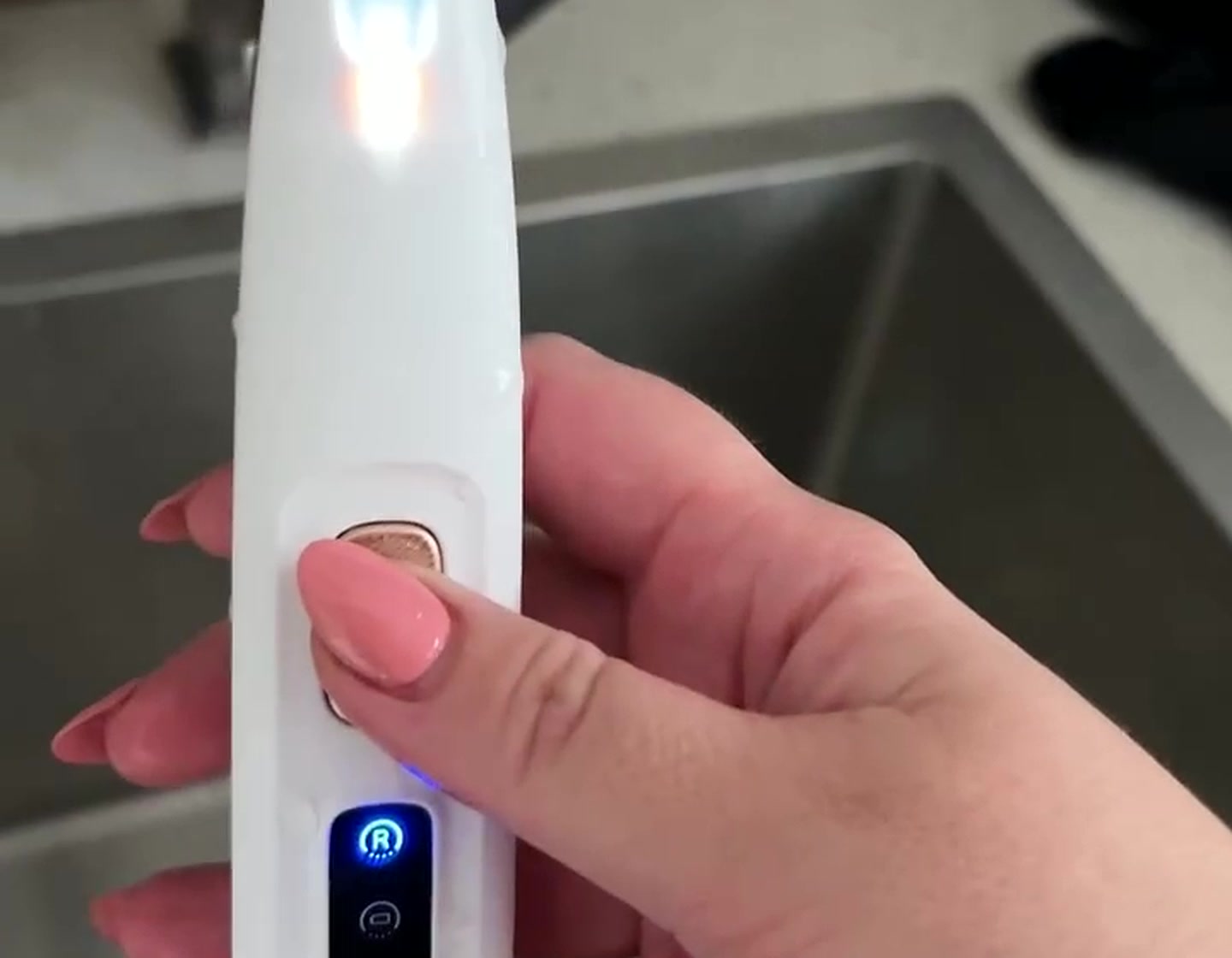
The HEELSIDE P1 Paw Trimmer — 18 mm ceramic head, built-in LED, washable, USB-C. $44, with The Quiet Kit free on every order.